

Nothing Original Here

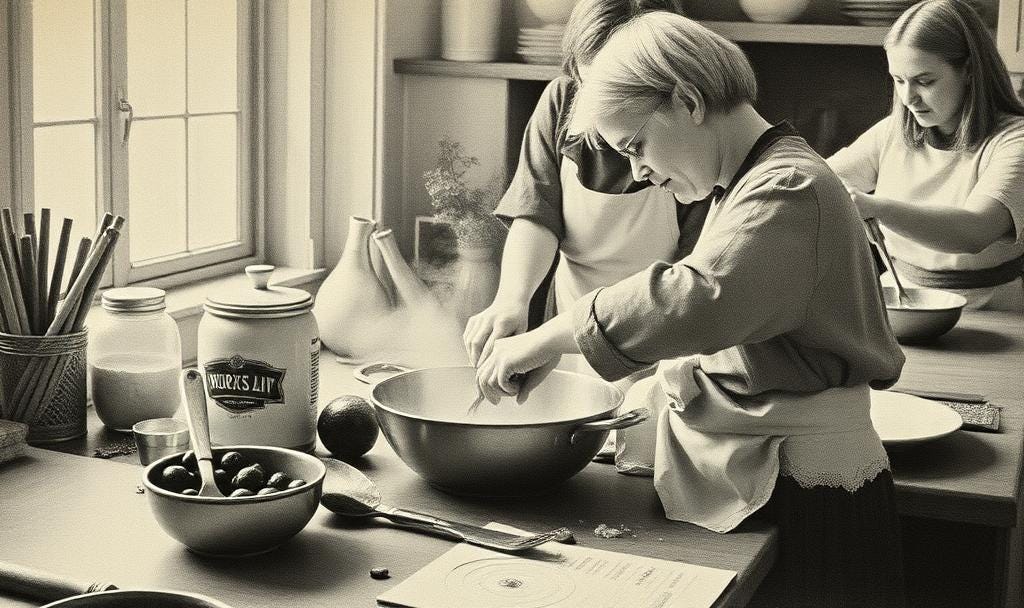
Every creative person has faced the blank page and thought, I have nothing original to say. Here’s the truth: nobody does. Every song you love, every novel that kept you up all night, every painting you couldn’t stop staring at—each of them is stitched together from what came before. Creativity isn’t about being the first. It’s about being brave enough to borrow.
Think of it like cooking. You don’t invent salt, or garlic, or olive oil. You gather ingredients that already exist and combine them in a way that tastes like you. Austin Kleon, in his book Steal Like an Artist, puts it this way: “Steal” doesn’t mean plagiarize—it means collect, remix, and transform. Take what excites you from other people’s recipes and throw it into your own pot until the flavor is unmistakably yours.
Bad stealing? That’s serving someone else’s dish word for word—the same seasoning, the same garnish, pretending it’s homemade. Good stealing is understanding why their flavors work and then bending them toward your own palate.
Every artist you admire is already doing this. They’ve lifted from books, from conversations, from old films, from the way light hit the window one winter morning. Their originality comes from the remix.
So instead of waiting for lightning, stock your pantry. Collect what sparks your appetite—quotes, images, riffs, overheard dialogue. Let them pile up. Then, when it’s time to create, let your instincts mix them together until something unrepeatable emerges.
Because originality isn’t about inventing ingredients from thin air. It’s about cooking with everything you’ve been given—and seasoning it with a taste only you can bring. Steal boldly. Steal wisely. And always serve it as your own.
The Creative Recipe Box
Step 1: Gather Your Ingredients
Pick three things that inspire you right now. They can be:
A favorite line from a song or poem
A photo or piece of art
A scene from a movie
A snippet of overheard conversation
Write them down or print them out. These are your “ingredients.”
Step 2: Taste Each One
For each item, jot a note: What do I like about this? Why does it stick with me? Don’t overthink. It might be the mood, the rhythm, the colors, or even just a single striking word.
Step 3: Mix Them Together
Now, pretend you’re making a new dish. Combine those ingredients into a short piece of writing:
Write a paragraph, poem, or micro-story that blends them.
Don’t worry about making it polished—just stir until something interesting appears.
Step 4: Add Your Seasoning
Read your piece out loud. Ask: Does this sound like me? If it feels flat, sprinkle in a detail only you could add—an inside joke, a memory, a phrase you’d actually say.
Step 5: Serve It Up
Notice how the borrowed bits have transformed.
An essay break
High School, Extended Indefinitely
By Liz Dubelman
Last night, Sylvie called me. (Not her real name, though the story is hers.) She said she felt me pulling away. And she was right.
She is bright, kind, and generous with her child and mine. But her romantic choices are a carousel of men I can barely sit through. After our last playdate, my husband joked he wanted a button that read: I can’t stand the men you sleep with. Cruel, yes, but not inaccurate.
Her call lingered. Not for what she said, but for what it revealed. Parenting pushes us into friendships we never chose, alliances forged by proximity. Your child likes their child, and suddenly you are entangled—scheduling playdates, trading snacks, offering confidences you never meant to give. The glue isn’t affinity; it’s logistics.
It feels familiar. Too familiar. And then I see it: parenting is high school all over again.
There are the cheerleaders, immaculate with their Bento-box snacks and curated Instagram feeds. The skeptics, rolling their eyes at every PTA decree. The theater kids, rehearsing their child’s future greatness as if auditions were already underway. And then there’s me—hovering on the edges, wondering how I ended up at this particular table.
Later, I called my mother. At seventy, she is clear-eyed and unsentimental, but since I became a parent, we’ve been colleagues of a sort—working the same shift, just decades apart. I told her my theory. She laughed, then said, “All of life is like high school. Even now, I feel a sting when Sarah doesn’t want me as a bridge partner.”
That landed harder than Sylvie’s call. Seventy years old, and still the cafeteria never ends. The tables just change shape. In place of sloppy joes and whispered gossip, there are card games, playdates, and men like Sylvie’s latest love-of-her-life.
So yes, I am retreating. Not only from Sylvie, but from the cafeteria itself—those accidental intimacies and the fragile hierarchies they build. Because my mother is right: life is high school extended indefinitely, and the lesson never changes. You find your table. You brace against rejection. You try not to take it all too personally.
And maybe that’s the curriculum no one admits to. Not algebra or grammar or bridge strategy, but learning how to sit in the cafeteria—again and again—with your tray in hand, and still find a way to belong.
I love this entire thing, but especially the high school analogy. I share the same belief as your mother regarding high school.
Life is all about finding where you belong - so true. Great post. Takes me back to school cafeteria days for sure.