

Is Any of This Working?
A Whole Artist dispatch on the specific misery of effort without feedback

Here is a thing that happens to almost every writer at some point, usually around month three of doing all the right things:
You post. You send the newsletter. You show up, as instructed, consistently and with something genuine to say. And then you watch the screen. And the screen watches back. And nothing moves.
No new subscribers. No spike in anything. No email from a stranger saying your words arrived at the right moment. Just the faint sound of your own content existing in the world, unwitnessed.
This is the part nobody puts in the marketing course. The part where you start to wonder if “showing up consistently” is just something people say, like “everything happens for a reason” or “the check is in the mail.”
You are not imagining it. The silence is real. What you’re probably getting wrong is what it means.
You Are Measuring the Wrong Things
The metrics that are easiest to see are almost never the metrics that matter. Amazon rankings change by the hour and tell you almost nothing useful. Follower counts measure how many people have pressed a button, not whether any of them care. Engagement rates on any given post are a function of the algorithm’s mood that day, which is to say, they are not a function of your writing at all.
The things that actually indicate a book is working are slower and harder to quantify. A reader who finishes your book and immediately buys a copy for someone else. A newsletter subscriber who has been opening every issue for eight months without ever clicking a thing, who then emails you one day to say something true. A conversation that starts because someone found a piece you wrote six months ago, shared it with no fanfare, and it reached exactly the right person at exactly the right moment.
These things do not show up in a dashboard. They happen in the long tail, which is not a consolation prize. It is the point.
The metric worth tracking is not how many people saw the thing. It is whether the thing is finding its people. Those are genuinely different questions.
On the Avoidance That Calls Itself Burnout
There is a version of “I need to step back from marketing for a while” that is legitimate creative rest. And there is a version that is avoidance wearing a wellness hat.
They feel identical from the inside. The difference is what you do with the break. Real rest restores something. The other kind just delays the same dread, with interest.
If you have stopped posting because the silence got demoralizing, that is not burnout. That is discouragement, which is a different problem with a different solution. Burnout is what happens when you have been doing too much for too long. Discouragement is what happens when you have been doing things without understanding what they are for.
The fix for discouragement is not rest. It is recalibration. It is going back to the actual reason you wrote the book, which had nothing to do with engagement rates, and letting that be the engine again.
The Silence Is Not Evidence of Failure
Most of what content marketing does, it does invisibly. Someone reads your newsletter and thinks about it for three days before telling a friend. A piece you wrote last spring gets shared in a group you have never heard of, by someone you will never meet, and it leads a stranger to your book. Your Substack sits quietly in someone’s inbox for four months, and then, during a bad week, they finally open it.
You will almost never see any of this happen. That is not a flaw in the system. It is just how trust builds, which is slowly, without announcing itself, and almost never on your timeline.
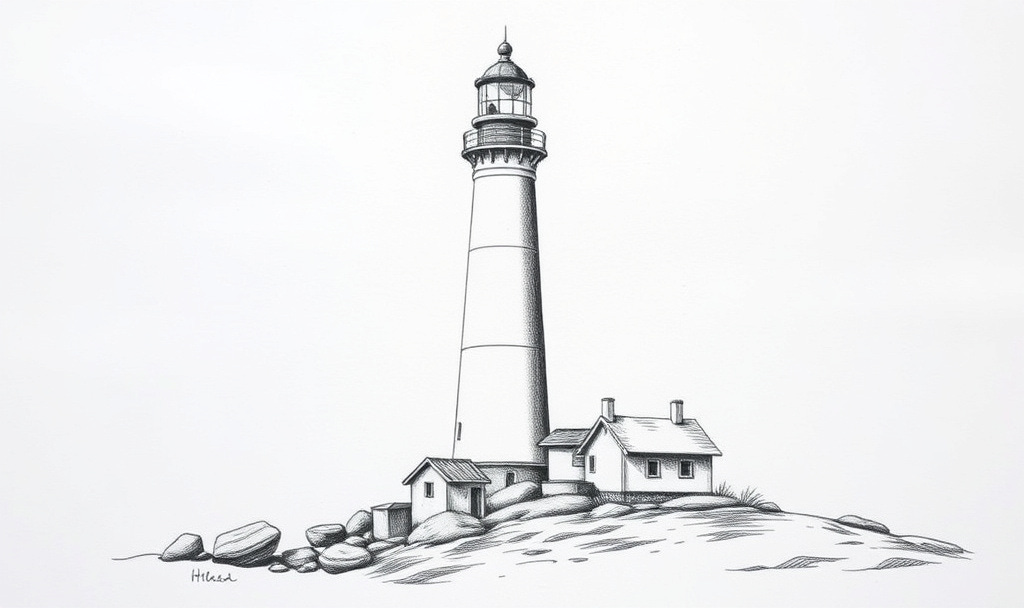
The lighthouse metaphor is real, not decorative. A lighthouse does not know who it is guiding. It does not get feedback. It keeps the light on anyway, because that is the job, and because the alternative is darkness.
What to Actually Do When Nothing Is Moving
Go back to one thing. Not the platform that feels most broken. The one that requires the least performance and the most honesty. For most writers, that is email. Write something true to the people who have already chosen to hear from you, without optimizing a single word of it.
Make the goal smaller. Not “build my platform” but “write one thing this week that I would actually want to read.” Not “grow my newsletter” but “send something to the people already on it.” Momentum does not come from trying harder at the large thing. It comes from doing the small thing well enough that you want to do it again.
And stop reading the dashboard for a while. Not forever. Just long enough to remember that you are writing for people, not for numbers, and that the people are out there, reading, even when the numbers say otherwise.
The needle is moving. It is just moving in a direction you cannot see yet.
And now our continuing fiction:
The Feather Act
by Liz Dubelman
A Fiction Break (WIP) to read what you may have missed, click here
VII.
The sword act was performed by a woman who couldn’t have been more than twenty-five, wearing nothing but strategically placed jewels and a confident smile that suggested she’d never doubted herself for a single second of her life.
She came out carrying two enormous curved swords that caught the stage lights and threw reflections across the ceiling like a disco ball made of knives. The music was something Middle Eastern and hypnotic, all drums and strings that made Abby’s pulse synchronize with the beat.
The performer balanced one sword on her head while she danced. Then on her shoulder. Then—and this was the part that made the entire audience gasp—on her tongue.
“How is that possible?” Abby whispered to Nicole.
“Physics and practice. The blade is balanced at its center of gravity. As long as she keeps it centered and doesn’t move her tongue laterally, it stays.” Nicole sipped her drink. “Also, the swords are dull. She’s not stupid.”
“She looks like she’s never been afraid of anything in her life.”
“She’s terrified of disappointing her mother, who thinks she should be in law school.”
Abby laughed. “Seriously?”
“Her mom’s a federal judge. Her dad’s a neurosurgeon. She makes more money doing this than either of them made their first five years out of school, and they still think she’s wasting her potential.” Nicole shrugged. “Different generation, different values.”
The performer did a backbend while balancing both swords—one on her head, one on her pelvis—and held it for what felt like minutes but was probably thirty seconds. Dollar bills rained onto the stage. She came up smiling, swords still perfectly balanced, and took her bow.
After the show, Abby stayed for another drink. Then another. Nicole had disappeared backstage to change, and Abby sat alone at the bar, watching people feed money into slot machines with the dedication of people in prayer.
“You look familiar.”
Abby turned. The man next to her was maybe seventy, wearing a golf shirt and expensive watch. He had the look of someone who’d retired with money and didn’t know what to do with all the time that came with it.
“I don’t think we’ve met,” Abby said.
“Desert Oasis?”
Her stomach dropped. “Sorry?”
“I live in Desert Oasis. I thought I’d seen you at the clubhouse.” He extended his hand. “Bill Henderson. Unit 47.”
Abby shook his hand because refusing would have been more suspicious. “Abby.”
“You here for the shows?”
“Sometimes.”
“Me too. Gets me out of the house.” He signaled the bartender for another beer. “My wife hates this place. Says it’s tacky. But I like the energy, you know? People actually doing things instead of sitting around waiting to die.”
Abby laughed despite herself. “That’s one way to put it.”
“You going to the HOA meeting tomorrow? They’re voting on those goddamn speed bumps.”
“I already went to one meeting about speed bumps. I can’t do another.”
“Smart woman.” He took a long drink. “This place is like high school, but everyone’s seventy and still hasn’t figured out that none of it matters.”
“That’s exactly what it’s like.”
They sat in comfortable silence for a moment, watching a woman at the slots win something and scream with joy.
“Can I give you some advice?” Bill said. “Old man to... how old are you?”
“Fifty-eight.”
“Old man to slightly less old woman.” He leaned in conspiratorially. “Stop trying to fit in over there. You’re not going to, and even if you do, who cares? Half those people are miserable. They’ve just gotten good at performing happy.”
“How do you know I’m trying to fit in?”
“Because everyone does at first. Then they realize Desert Oasis is just a place to live, not a place to belong.” He finished his beer. “The people you actually want to know? They’re not at the coffee socials. They’re here, or at the art museum, or driving to L.A. to see their grandkids. They’re the ones who figured out that retirement doesn’t mean retiring from having a life.”
Nicole appeared then, changed into jeans and a leather jacket, her stage makeup scrubbed off. She looked from Bill to Abby and raised an eyebrow.
“This is Bill,” Abby said. “He lives in Desert Oasis.”
Nicole’s expression shifted to something more guarded. “Cool.”
“And this is Nicole. She performs here.”
Bill’s eyes lit up with recognition. “KiKi! The feather fans. You’re incredible. I saw you last month—that split at the end, my knees hurt just watching it.”
Nicole relaxed slightly. “Thanks. Took me six months to get that one performance-ready.”
“Well, it’s worth every dollar I throw on that stage.” He stood up, leaving cash on the bar. “Ladies, it’s been a pleasure. Abby, I’ll see you around. Or not, if you’re smart.”
He walked away toward the poker tables, whistling.
“He seems cool,” Nicole said.
“He told me to stop trying to fit in at Desert Oasis.”
“Good advice.”
“Everyone keeps giving me advice. My daughter thinks I need therapy. The women at Desert Oasis think I need community. Bill thinks I need to stop caring what anyone thinks. You think I need to keep coming to pole class.” Abby finished her drink. “What I actually need is to figure out what I want, separate from what everyone else wants from me.”
Nicole sat down, signaled the bartender. “So what do you want?”
It was such a simple question. Abby realized she’d never been asked it before—not really. Roger had asked what she wanted for dinner, what she wanted to watch on TV, what she wanted for Christmas. But no one had ever asked what she wanted from her life.
“I don’t know,” Abby said finally. “I spent thirty-seven years wanting Roger to see me as a whole person instead of a supporting character in his life. Then he died, and I got my wish in the worst possible way. Now I’m fifty-eight and living in a community that feels like a waiting room for death, and the only time I feel alive is when I’m here watching women do impossible things or trying to climb a pole in a room full of strangers who don’t care that I’m a widow or that I’m too old for this or that I’m lying to everyone I’m supposed to know about where I spend my time.”
“So stay here.”
“What?”
“Stay here. Stop going back.” Nicole said it like it was obvious. “You’ve got Roger’s life insurance, right? Get a studio apartment in Palm Springs. Take pole classes five days a week if you want. Come to shows. Make friends who don’t give a shit about HOA meetings.”
“I can’t just abandon my whole life.”
“What life? The one where you pretend to like water aerobics and lie about yoga studios? That’s not a life, that’s witness protection.”
Abby laughed, but it came out shaky. “My daughter would think I’ve lost my mind.”
“Your daughter’s in Seattle. How often do you even see her?”
“She visits sometimes.”
“Does she like visiting you at Desert Oasis?”
Abby thought about her daughter’s last visit—three days of forced cheerfulness, her daughter sleeping in Roger’s old recliner because the guest room was full of boxes Abby hadn’t unpacked yet, both of them pretending that Abby was “adjusting” instead of slowly suffocating.
“Not really,” Abby admitted.
“So move. Find a place she’d actually want to visit. Somewhere that doesn’t smell like retirement and regret.” Nicole’s drink arrived and she took a sip. “I’m not saying run away to Portugal or whatever. I’m saying move twenty minutes up the highway to a place where you can be yourself without performing for an audience of judgmental old people who think fun is arguing about paint colors.”
“It’s not that simple.”
“Why not?”
Abby opened her mouth to list all the reasons—the lease, the community fees she’d already paid, the neighbors who would talk, the daughter who would worry, the general principle that fifty-eight-year-old widows don’t just pick up and move because they like burlesque shows and pole dancing.
But Nicole was looking at her with the same expression she’d had when teaching Abby to climb—expectant, patient, waiting for Abby to figure out that the only thing stopping her was herself.
“Sharon moved,” Nicole said quietly. “After her husband died. She left their house in Rancho Mirage, got a condo in Cathedral City, and started over. She said staying in that house was like living in a museum dedicated to someone else’s life.”
“Is that what my apartment is?”
“I don’t know. Is it?”
Abby thought about Roger’s recliner. His books. His reading glasses. The way she avoided the bedroom most nights and slept on the couch because the bed still felt like his territory.
“Yeah,” she said finally. “It is.”
Nicole didn’t say anything else, just sat with her while Abby worked through it. Around them, the casino hummed with life—people winning, losing, laughing, drinking, doing anything except sitting still and waiting for time to pass.
Abby’s phone buzzed. A text from Linda: Harriet says she saw you at Santo Caliente tonight. Just wanted to make sure everything is okay! We worry about you.
The subtext was clear: We’re watching you. We know you’re lying. Explain yourself.
Abby stared at the text for a long time. Then she typed: Everything is fine. Thanks for checking.
She didn’t elaborate. Didn’t explain. Didn’t apologize for being where she wanted to be instead of where they thought she should be.
Nicole read over her shoulder. “That’s progress.”
“Is it?”
“You didn’t say sorry. That’s huge.”
Abby put her phone away and ordered another drink. Tomorrow she’d deal with Linda and Harriet and the inevitable confrontation about where she’d been and why she’d lied. Tonight, she was exactly where she wanted to be, and that would have to be enough.
VIII.
Abby started showing up early on Fridays, before the crowd filled in, when the casino still smelled more like industrial cleaner than cigarettes and desperation.
She learned things, though not on purpose.
The sword performer—Jennifer, not Jasmine—was usually backstage doing homework. Actual homework, with a highlighter and everything. One night Abby caught a glimpse of her textbook: Principles of Musculoskeletal Rehabilitation.
“Physical therapy,” Jennifer said when she noticed Abby staring. “Loma Linda. I graduate in May.”
“Your parents must be proud.”
Jennifer laughed, closing the textbook. “My parents think I teach pilates to rich ladies in Riverside. Which I guess isn’t technically wrong if you count pole as pilates.”
She went back to highlighting something about rotator cuff injuries while wearing pasties shaped like stars. Abby ordered another drink.
Bill showed up around eight, same stool at the bar, same golf shirt in a slightly different shade of beige. He nodded at Abby, ordered his beer, and fed a twenty into the video poker machine embedded in the bar top with the efficiency of someone performing a well-practiced ritual.
“Carol doing okay?” Abby asked, because she’d seen Carol at water aerobics that morning looking like she wanted to drown someone.
“She’s fine. Mad at me for something. Can’t remember what.” He hit the deal button. “She’s always mad about something. Doctor says it’s the stroke—damages the part of the brain that regulates mood. I say it just gave her permission to be as mean as she always wanted to be.”
He lost the hand. Fed in another twenty.
“You come here every night?” Abby asked.
“Only the nights I want to stay married.”
Sharon showed up for their Tuesday coffee with her arm still in the brace, wearing a t-shirt that said “NASTY WOMAN” in sequins.
“Six weeks,” she said, waving the braced arm like it was an accessory she’d chosen. “Doctor says I’m healing well for my age, which is doctor-speak for ‘you’re old, stop doing stupid shit.’”
“Are you going to stop?”
“Absolutely not. I ordered aerial hammock silks on Amazon. They arrive Thursday.” She ordered a latte with extra espresso. “My daughter called last night. Wants me to move to San Diego, closer to her. Says I’m ‘isolated.’”
“Are you?”
“I have pole class three times a week and a burlesque showcase in six weeks where I’m performing to ‘Respect’ even if I have to do it one-armed. I’m the opposite of isolated. I’m just isolated from people who think isolation means not going to book club.”
The cocktail waitress—Rosa—brought Abby’s usual vodka soda without being asked. Abby had been coming here long enough that she’d become a “usual.” She wasn’t sure how she felt about that.
“You want food?” Rosa asked. “Kitchen’s slow tonight.”
“I’m okay.”
“You should eat. You’re here four nights a week drinking on an empty stomach. That’s how people end up like Tom over there.”
She gestured at the man feeding twenties into a slot machine like he was personally financing the casino’s quarterly earnings.
“What’s wrong with Tom?”
“Nothing that winning six thousand dollars wouldn’t fix.” Rosa moved to the next table. “Everything else though—that’s not a slot machine problem.”
Abby watched Tom for a while. He had a system—play for exactly two hours, stop regardless of whether he was winning or losing, cash out, go home. She’d seen him do it every Friday for weeks now. He never looked happy when he won. He never looked sad when he lost. He just looked like someone going through the motions of something that used to mean more.
Nicole showed up late, still in street clothes, her stage makeup half-done.
“My dad called,” she said, sliding into the booth. “Wants to have dinner. ‘Talk about my future.’” She made air quotes with a bitterness that suggested this wasn’t the first time they’d had this conversation.
“Are you going?”
“Probably. He’ll pay, which means I can save the money I would’ve spent on food. And he’ll spend two hours explaining why what I do isn’t real work, and I’ll spend two hours not saying what I’m actually thinking, and we’ll both pretend we had a nice time.”
“What are you actually thinking?”
“That I make in two nights what he makes in two weeks, and I don’t have to deal with teenagers who think The Great Gatsby is boring.” Nicole signaled Rosa for a drink. “But I can’t say that because then I’m the ungrateful daughter who thinks she’s better than her public school teacher father, and I’m not—I’m just better at capitalism than he ever was, which he should appreciate since he votes Republican.”
Rosa brought the drink. Nicole downed half of it.
“Everyone’s got a thing,” she said finally. “You know?”
Abby thought about Carol doing aggressive wading in the pool while pretending she wasn’t furious. About Bill feeding twenties into video poker to avoid going home. About Tom at the slots, about Rosa working four nights a week on her feet, about Jennifer highlighting anatomy textbooks between sword acts.
“Yeah,” Abby said. “I’m starting to notice.”
The next week, Harriet from three units down cornered Abby at the mailboxes. Harriet wore a visor even though they were inside and had the energy of someone who’d been waiting for this conversation.
“I saw you at Santo Caliente last Friday,” Harriet said. No preamble, no pretense. “At the bar. With that young girl.”
“Okay,” Abby said.
“I just think—well, Linda and I were talking, and we’re concerned.”
“About what?”
“About you spending so much time there. It’s not—” Harriet lowered her voice. “It’s not the kind of place for women like us.”
“What kind of women are we?”
Harriet blinked. “You know. Respectable.”
Abby thought about Jennifer doing splits while balancing swords. About Nicole holding her body weight on a pole in seven-inch heels. About Vanessa at forty-two still performing even though her knees were shot. About Sharon ordering aerial silks with a dislocated elbow.
“I’m not sure I am respectable,” Abby said. “I think I might just be good at pretending.”
She took her mail and walked away, leaving Harriet in the lobby looking like someone had just told her the earth was flat after all.
That night at Santo Caliente, Abby sat at the bar and watched people. Really watched them.
The couple at table three who came every week and sat in silence, not angry silence, just the silence of people who’d run out of things to say to each other twenty years ago. The woman at the slots who wore the same purple velour tracksuit every Friday and drank the same brand of light beer and played the same machine like she was punching a time clock. The bachelor party in the corner, drunk and loud, throwing money at performers who were working their way through grad school or supporting kids or just trying to make rent in a city that kept getting more expensive.
Nobody here had it figured out. But at least they’d stopped pretending they did.
Abby’s phone buzzed. Her daughter: Mom, are you eating enough? You sound different on the phone lately.
She typed back: I’m fine. Just figuring some things out.
That’s what worries me.
Abby put the phone away. Ordered another drink. Around her, people were figuring things out too—with varying degrees of success, most of it questionable, none of it resembling the neat solutions Linda’s book club probably discussed over chardonnay.
Nicole slid into the booth, makeup done now, ready to perform.
“You good?” she asked.
“Define good.”
“Fair point.” Nicole stood up. “I’m on in five. Stay for the whole show?”
“Where else would I go?”
Nicole grinned. “That’s the spirit.”
Your post spoke directly to me, and was extremely helpful. Loved your story, wonderfully written and wise